Blowout on the Highway in the Heat? How to Handle It Safely
November 18, 2026
Small Precautions Now Prevent Costly Engine Damage
A rising temperature gauge on a hundred degree day is not background noise. It is a genuine warning before something under the hood breaks. The habits that protect an engine stay simple: cut the AC the moment the needle moves, find a shoulder instead of the first gap in the fence line, and leave the radiator cap alone no matter how tempting it is to check yourself. Those few minutes often separate a delayed afternoon from lasting engine damage.
Out here in San Angelo, TX where the next town can be a drive away, patience matters more. Nobody wants to sit on a hot shoulder waiting, but a warped cylinder head does not care how inconvenient the timing was. Eddy's Towing
has spent 10
years getting overheated engines off San Angelo shoulders before small problems turn into damage. The drivers who come through a summer overheat with nothing worse than a delayed afternoon are the ones who stopped early.
Quick Answer: When a tire blows out at highway speed, keep both hands on the wheel, hold the car straight, and ease your foot off the gas instead of slamming the brakes. Let the vehicle slow on its own, then steer gently toward the shoulder or the nearest safe pull off. Once you are stopped well clear of traffic, turn on your hazard lights, stay buckled or step out on the side away from the road, and decide whether changing the tire is safe. If the shoulder is narrow, the ground is soft, the heat is severe, or you are unsure, call for help and wait somewhere protected.
A loud bang, a sudden lurch toward one side, and a flapping, thumping sound that shakes the whole car. The needle says seventy five, the pavement ahead shimmers in the afternoon sun, and the nearest town is a long way off. Your heart jumps into your throat, and every instinct says to stand on the brake pedal. That instinct is exactly what turns a bad moment into a dangerous one.
A blowout feels violent, but it is survivable when you know what the car is doing and what it needs from you. Out here in the Concho Valley, where highways run long and straight and summer pavement bakes for months, tire failures are a regular part of life on the road. This guide covers what happens in those first seconds, how to bring the vehicle to a stop, what to do once you are parked, and how to decide between changing the tire yourself and getting a professional to do it.
What Actually Happens in a Blowout
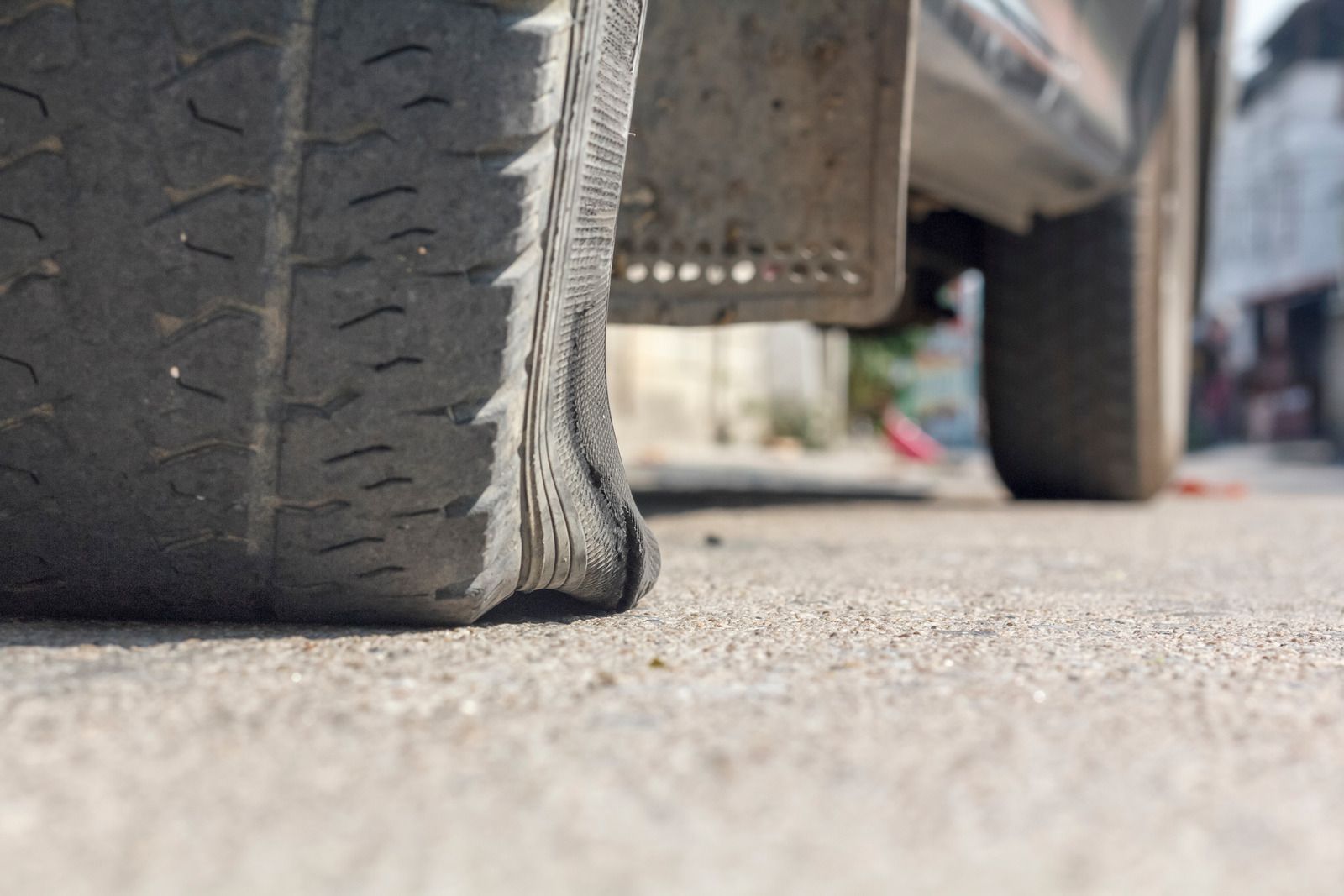
A blowout is not the same as a slow leak. In a slow leak, air escapes gradually and the tire sags over miles. In a blowout, the tire loses its air almost all at once, often because the casing or sidewall has split or the tread has separated from the body of the tire.
The Car Pulls Toward The Failed Tire
A front tire failure tugs the steering wheel toward that side. A rear tire failure feels different, with the back end swaying or fishtailing a little as the vehicle tries to wander. Both are manageable if you stay smooth.
The Noise Is Loud And Rhythmic
You may hear a bang, then a heavy flapping as pieces of rubber slap the road and the wheel well. That sound can seem like the car is coming apart, but it is mostly loose rubber.
The Vehicle Slows On Its Own
A flat tire creates a great deal of drag. You do not need to force the car to stop, because it is already losing speed. Your job is to keep it pointed straight while it does.
Understanding this helps you stay calm. The car is not out of control. It is asking for steady hands and patience.
The First Ten Seconds
What you do right away matters more than anything that comes after. Think of it as a short sequence you can run in your head.
Grip The Wheel With Both Hands
Hold it firmly, but do not wrestle it. The tire is pulling one way, and you need to guide the car in the direction you want it to go.
Look Where You Want To Go, Not At The Problem
Keep your eyes up and down the road. Your hands tend to follow your eyes, and staring at the shredded tire or the guardrail makes it more likely you will steer toward it.
Ease Off The Gas
Lift your foot gradually and let the vehicle begin to slow. Do not stomp the brake, and do not jerk the wheel to correct for the pull. Sudden braking shifts weight forward and can upset a car that is already unsteady.
Keep The Car Straight Until The Speed Drops
Make small steering corrections only. Once you have slowed to a much lower speed, usually well under the posted limit, you can begin to move over.
Turn On Your Hazard Lights Early
The drivers behind you do not know what happened. Flashers tell them something is wrong before you even reach the shoulder.
TIP: If your vehicle has cruise control on, tap the brake lightly once to cancel it, or press the cancel button, and then lift off the gas. Cruise control can try to hold speed or surge as the car pulls, which is the opposite of what you need during a tire failure.
Bringing the Vehicle to a Stop
Once the car is steady and slowing, you can start thinking about where to put it.
Choose The Safest Place You Can Reach
A wide paved shoulder is best. A turnout, a gravel pull off, a driveway entrance, or an exit ramp can also work. Avoid stopping in a travel lane, on a curve, or just over a hill where oncoming traffic cannot see you.
Move Over Gradually
Let the car drift toward the edge with gentle steering. Use your mirrors and check your blind spot, but keep your eyes mostly forward. Sharp turns at speed can make the vehicle swing.
Brake Lightly At The Very End
Once you are rolling slowly, press the brake pedal gently and steadily to bring the car to a complete stop. A flat tire will already have taken much of your speed.
Go As Far As You Safely Can, But Not Too Far
On a rural highway, you may be tempted to keep rolling on a shredded tire in search of a better spot. Driving on a destroyed tire for any real distance can bend the wheel, damage the brake lines or suspension, and throw rubber into traffic. A short, slow roll to a clearly better location is fine. A long crawl is not.
Put The Vehicle In Park And Set The Parking Brake
Turn the wheels away from the road if you are on a gravel shoulder, in case the car shifts.
Why Heat Makes Blowouts More Likely
Anyone who has driven West Texas highways in July knows how hot the road can get. The surface can be far hotter than the air, and that heat goes straight into your tires.
Heat Raises Tire Pressure
As a tire warms up, the air inside expands. A tire that was correctly filled in the cool of the morning can reach a much higher pressure by midafternoon on a long drive.
Underinflation Is The Real Problem
A tire that is low on air flexes more with every turn of the wheel, and that flexing creates extra heat inside the tire. Add hot pavement and highway speed, and the rubber and internal cords can break down. Most blowouts trace back to a tire that was underinflated, worn, damaged, or carrying too much weight.
Worn And Aging Tires Fail First
Tread that is nearly gone, sidewalls with cracks, or a tire that has simply been on the vehicle for many years are all more likely to give out in the heat. Sun and dry air slowly harden rubber, even if the tread still looks fine.
Overloading Adds Stress
A truck packed with tools, a trailer with too much on the tongue, or a car loaded for a long trip puts more strain on every tire. Heavy loads and heat together are a hard combination.
Debris And Impact Damage Hide Until Later
A pothole, a curb, a chunk of caliche on a ranch road, or a piece of metal from the highway can weaken a tire without flattening it. The damage may not show up until a hot day and a long run turn a small weakness into a failure.
Most of these causes are things you can see or check before you leave. A few minutes with the tires can prevent the whole situation.
Once You Are Stopped
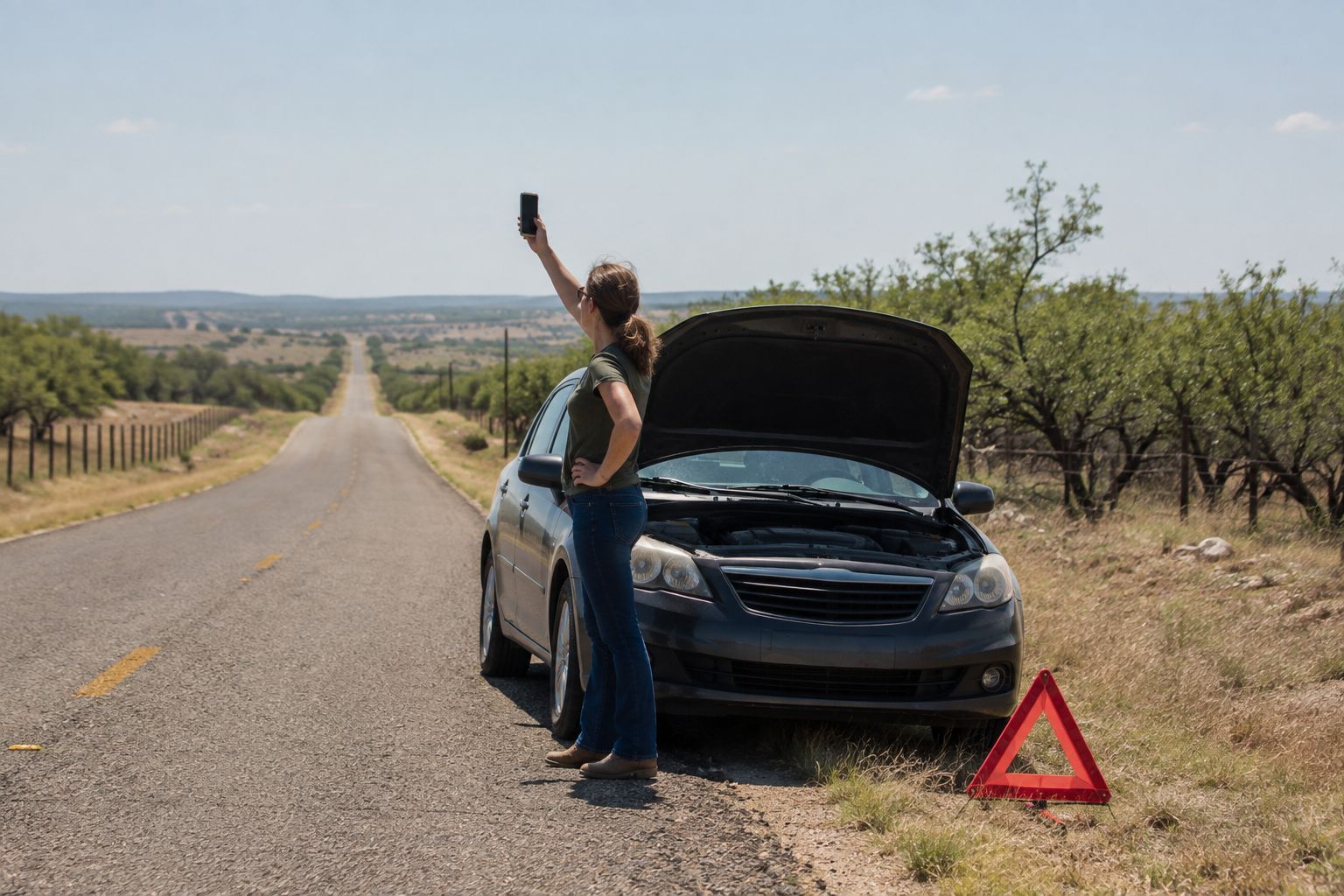
You made it onto the shoulder. The adrenaline is still running, and now the second set of risks begins, because the edge of a busy road is not a safe place to relax.
Leave The Flashers On And Stay Put For A Moment
Take a breath, look around, and see what traffic is doing. Remind yourself that the hard part is over.
Decide Whether To Stay In The Car Or Step Out
If you are on a narrow shoulder with fast traffic, the vehicle itself often offers the best protection while you call for help, as long as you stay buckled. If you do get out, use the side away from the road, and move well off the pavement, ideally behind a guardrail or far up the embankment.
Never Stand Directly Behind Or In Front Of The Vehicle
A passing driver can drift onto the shoulder, especially at night or in a glare. Keep the car between you and traffic only if there is room to step away from it quickly.
Put Out Reflective Triangles Or Flares If You Have Them And It Is Safe To Do So
Place them well back from the vehicle so drivers see you early. If walking back along the road feels risky, skip it.
Look At The Ground
Soft sand, loose gravel, or a sloped shoulder can make a jack unstable. Hot asphalt can also soften under a jack base on a scorching afternoon.
WARNING: Do not change a tire on a narrow shoulder with fast traffic right beside you, on soft or sloped ground, or in the middle of a brutal afternoon with no shade and no water. Vehicles slip off jacks, and passing drivers can leave the road without warning. A tire is replaceable. You are not. If conditions look unsafe, wait for help from a safer spot instead.
Should You Change the Tire Yourself?
Plenty of people can swap a tire, and on a quiet road with a flat, firm surface, it can be a reasonable choice. Still, a highway blowout in the heat is a different situation than a flat in your driveway.
Check Your Spare Before You Commit
Is it there, is it inflated, and do you have the jack and lug wrench? Many modern vehicles carry a compact temporary spare, often called a donut, that is meant for short distances and lower speeds only. Treat any spare as a way to reach a safe place for a proper repair, not as a long term solution.
Consider The Ground And The Traffic
If the shoulder is wide, firm, and level, and traffic is light, changing the tire may be fine. If the vehicle is leaning, the road is busy, or the ground is soft, it is not.
Consider The Heat
Working beside a hot car on baking pavement, with the sun overhead and no breeze, wears you down faster than you expect. Lugs can be tight, the wheel is heavy, and the tire itself is hot to the touch. Stop for water and rest if you start feeling dizzy, lightheaded, or unusually tired.
Consider Your Passengers
Children, older family members, and pets cannot wait comfortably in a car with the air conditioning off. If you need to shut the engine down while you work, think about how long they will sit in the heat.
Consider The Damage
A blowout can tear up the wheel well, bend a rim, or cut a brake line or sensor wire. If the wheel looks bent, if you see fluid dripping, or if the car pulls strangely after you stop, a tire swap alone will not solve the problem.
If you answer no to any of these, the safer move is to call a professional and let them come to you. That is exactly what a tire change service exists for.
Why West Texas Heat Is Hard on Batteries
Most people assume cold weather kills batteries. Cold does expose a weak one, because it slows the chemical reaction inside and demands more power to turn thick oil. But heat is what does the lasting damage, and San Angelo summers deliver plenty of it.
Under the hood on a triple digit afternoon, temperatures can climb far beyond the air temperature. That heat speeds up the chemical breakdown inside the battery, shortens its life, and can cause the fluid inside to evaporate. A battery that survives the summer on the edge often quits on the first cool morning of fall, when it needs a little more to start the engine and has nothing extra left to give.
Dust and dry air add to the problem. Fine grit works its way onto the battery top and terminals, and combined with the heat it encourages that chalky white or bluish crust that builds on the posts. That crust acts like a layer of insulation between the cable and the battery, and it can create the exact single click symptom that makes the starter look guilty when it is not.
Long daytime drives on open highway are easy on a battery in one way, because the alternator has time to recharge it. Short trips around town in the heat are harder, since the engine runs only briefly while the air conditioner pulls hard on the system. If your truck sits for weeks at a time between ranch visits, the battery also drains slowly on its own.
What a Roadside Tire Change Looks Like
When you call a tow and roadside company, you are not asking someone to rescue you from a disaster. You are asking an experienced person with the right equipment to handle a job that is hard to do safely alone.
They Arrive With Proper Equipment
That includes a quality jack, an impact tool or the right wrench, wheel chocks, lighting, and reflective warning gear for the roadside.
They Position Their Truck To Protect The Work Area
A service truck parked behind you with its lights on creates a visible barrier between your vehicle and traffic. That alone makes the situation safer.
They Check The Spare Before It Goes On
A spare that has sat for years may be low or damaged. An experienced operator will test it, and if it is not usable, they will tell you what your options are.
They Look At The Whole Picture
They will check whether the wheel is damaged, whether the vehicle is safe to drive, and whether the rest of the tires are in decent shape. If the car cannot go on, they can load it onto a flatbed and take it where it needs to go.
For drivers who are far from home, that last step matters. If the spare is missing or flat, or the damage is too severe, you do not want to be stuck beside the road with no plan.
After the Blowout
Once you are moving again, the incident is not quite over.
Drive Slowly And Stay Out Of The Fast Lane
A compact spare is not built for highway speeds. Follow any speed limit marked on the spare itself, and plan to head straight to a tire shop.
Have All Four Tires Checked
If one tire failed from age, heat, or low pressure, the others may be heading the same direction. A technician can check the tread, the sidewalls, the pressure, and the date codes.
Check The Spare And Repack Your Kit
Make sure whatever you used goes back into the vehicle in working order, and replace anything that was damaged.
Look For The Cause
Was the tire underinflated? Did you pick up a nail or hit something sharp? Was the vehicle overloaded? Knowing the cause helps you prevent a repeat.
Preventing the Next Blowout
You cannot control the road, but you can control how ready your tires are before you leave.
Check Tire Pressure When The Tires Are Cold
That means before you drive, or after the car has sat in the shade for a few hours. Use the number on the sticker inside the driver door, not the number printed on the tire sidewall.
Check Before Long Summer Drives
A quick walk around the vehicle before a trip across the county takes only a few minutes.
Look Closely At The Sidewalls
Bulges, cracks, cuts, and areas where the rubber looks blistered are all signs that a tire should not be on the road.
Watch The Tread
If the tread is shallow or wearing unevenly, the tire is weaker and more likely to fail. Uneven wear can also point to alignment problems.
Pay Attention To Age
Rubber ages even when a tire is not worn out. If you do not know how old your tires are, ask a tire professional to read the date code.
Do Not Ignore The Pressure Warning Light
If your dash shows a tire pressure warning, stop and check. It is easy to wave off a light that comes and goes with temperature changes, but a steady light or a tire that keeps losing air needs attention.
Respect The Load Rating
Carry only what the vehicle and tires are meant to handle, and give extra caution when towing or hauling in the heat.
Keep A Basic Kit In The Vehicle
Water, a flashlight, reflective triangles, gloves, and a charged phone cable all make a roadside stop safer and more comfortable.
Staying Calm Is Half the Fix
A blowout is loud, sudden, and frightening, but it follows a pattern you can learn. Hold the wheel, keep the car straight, ease off the gas, and let the vehicle slow before you steer for the shoulder. Once you are stopped, put your safety ahead of speed. Decide with a clear head whether the ground, the traffic, and the heat make a tire change reasonable, and do not hesitate to call for help if they do not. On a long West Texas highway, a calm driver and a quick call can turn a scary afternoon into a short delay.
Frequently Asked Questions
What should I do first if my tire blows out on the highway?
Keep both hands on the wheel, hold the car straight, and ease off the accelerator without slamming the brakes or jerking the wheel. Turn on your hazards and let the vehicle slow first.
Why do blowouts happen more often in hot weather?
Heat raises tire pressure and stresses the rubber. Underinflated, worn, damaged, or overloaded tires flex more and heat up faster on hot pavement at highway speed, making summer failures more common.
Is it safe to drive on a blown tire to a better spot?
Only briefly and at very low speed. A shredded tire can damage the wheel, brakes, and suspension while throwing debris at other drivers. Roll slowly to a clearly safer spot, then stop.
Should I stay in the car or get out?
On a narrow shoulder with fast traffic, staying buckled inside is often safer. If you exit, use the side away from traffic and move well clear, ideally behind a guardrail or up an embankment.
Can I use a compact spare tire to keep driving?
Only temporarily. A compact spare is meant to get you to a safe place and a proper repair, not for long distances or highway speeds. Follow its printed limits and replace the damaged tire soon.
When should I call a professional instead of changing the tire?
Call when the shoulder is narrow, the ground is soft or sloped, traffic is heavy, or the heat is severe. Also call if the spare is unusable or the wheel looks damaged.
Staying Steady When a Tire Gives Out
A blowout at highway speed feels violent, but it follows a predictable pattern. Holding the wheel with both hands, keeping the car straight, and easing off the gas let the drag of the flat tire do the slowing for you. Once the speed drops, a gentle move toward a wide, firm shoulder, hazard lights on, and a calm look at traffic turn a frightening bang into a manageable stop on the side of the road, even on a scorching afternoon.
What happens after the car stops matters just as much. Narrow shoulders, soft ground, heavy traffic, and brutal afternoon heat can make a
roadside tire change
riskier than it looks. Eddy's Towing
has spent 10 years helping drivers in San Angelo, TX through these exact moments, with proper equipment and a truck positioned to shield the work area. A short wait in a safe spot away from traffic is a small price for getting home without a second scare.