Engine Overheating in Triple-Digit Heat? Pull-Over Steps Before It's Worse
September 26, 2026
Quick Answer: The moment the temperature needle pushes toward the red, turn off the air conditioner, crank the heater to full blast, and ease off the gas while you look for a safe place to stop. Pull all the way onto the shoulder, put the vehicle in park, and turn on your hazards. If you see steam or smell something sweet, shut the engine off completely rather than letting it idle. Do not open the hood right away and never touch the radiator cap — the system is pressurized and the coolant underneath can be well past boiling. Give it at least thirty minutes before you even think about checking fluid levels, and if the gauge doesn't start dropping once the engine's off, treat it as a tow, not a wait-it-out.
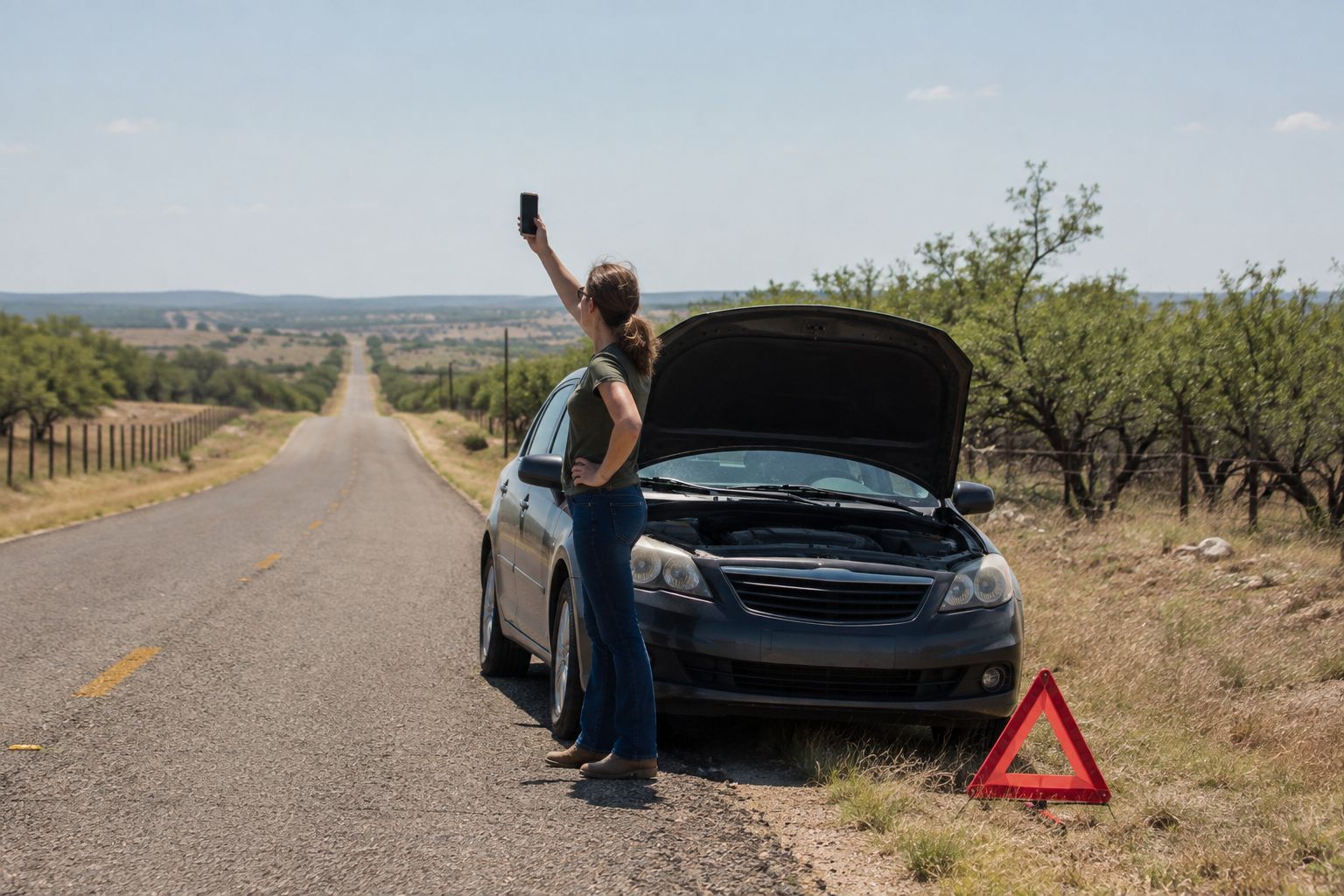
You're forty minutes from the nearest town, the AC is working overtime, and the needle on the temperature gauge has quietly crept past the halfway mark. It's easy to tell yourself it's nothing — the engine's just working hard in the heat, right? Then it hits three-quarters, then it's brushing red, and now you're deciding in real time whether to keep pushing toward town or pull over on a stretch of two-lane highway with no shade in sight.
That decision matters more than most drivers realize. An engine that's actually overheating isn't just uncomfortable — it's minutes away from warping a cylinder head, blowing a gasket, or cracking a block. And once that happens, you're not looking at a roadside fix. You're looking at a tow either way, just a much longer and more complicated one.
How to Tell It's Really Overheating, Not Just Working Hard
Engines run hotter in summer. That part's normal. What isn't normal is a gauge that keeps climbing after you've backed off the throttle, or a temperature warning light that stays lit instead of flickering once and clearing.
The Gauge Tells The Real Story
Most dashboards mark the safe zone with a middle band and red at the top. If the needle sits in that red zone and holds there — not just touches it for a second going up a grade — the cooling system isn't keeping up.
Steam Looks Different From Summer Haze
Heat shimmer off the hood in August is normal. A thin stream of white vapor rising specifically from under the hood, especially with a sweet, slightly syrupy smell, means coolant is escaping somewhere it shouldn't be.
A Sluggish, Underpowered Feeling Can Be An Early Sign
Some vehicles go into a protective mode when the engine runs hot, cutting power to reduce heat output. If the car suddenly feels weaker than it did a mile ago, that's worth taking seriously even before the gauge confirms it.
According to AAA, an
overheating engine should never be ignored or driven through — continuing to run a motor that's actually too hot can warp components and damage gaskets in a matter of minutes, and that kind of damage often can't be undone once it's happened.
The First Sixty Seconds After You Notice the Needle Climbing
What you do in the next minute decides how bad this gets. Turn the air conditioner off completely — it puts extra load on the engine and works against you right when you need less heat generated, not more. Switch the heater on and turn the fan up high instead. It sounds backward, pulling hot air into the cabin on a hundred-degree day, but the heater core pulls heat away from the engine and vents it into the car, buying you a few extra minutes of driving time.
Ease off the accelerator and start scanning for a real place to stop — not just the first patch of gravel. On farm-to-market roads and highway shoulders around the Concho Valley, that often means driving another quarter mile past where you'd like to, just to reach a spot with a wide, level shoulder instead of a narrow strip next to a drop-off or a blind curve.
Once you've found it, pull off as far as the surface allows, put the transmission in park, and hit the hazards. If a shoulder isn't available and you're still in traffic, keep the heater running and creep toward the nearest exit or wide spot rather than stopping in a lane.
What to Do Once You're Actually Stopped
Shut the engine off if there's any steam, smoke, or a burning smell — running it any longer just adds heat to a system that's already struggling. If the gauge was climbing but nothing's visibly steaming, it's still smart to turn the engine off and let it sit rather than idling on the shoulder hoping it cools on its own.
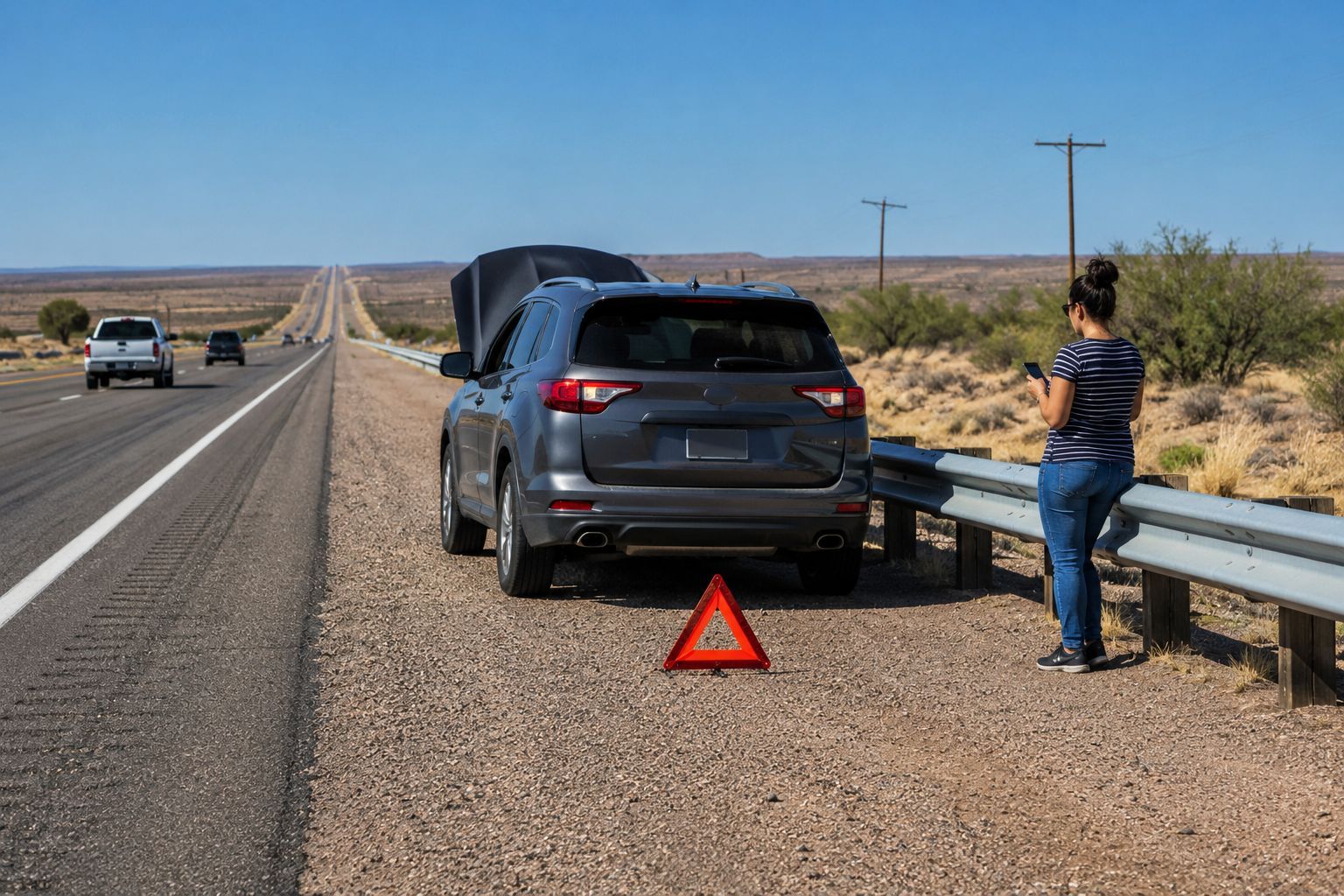
Stay out of the road and away from the traffic side of the vehicle. If you're on a narrow shoulder with cars passing close, it's often safer to stand well back from the vehicle, past the guardrail or in the bar ditch, rather than lingering next to the driver's door.
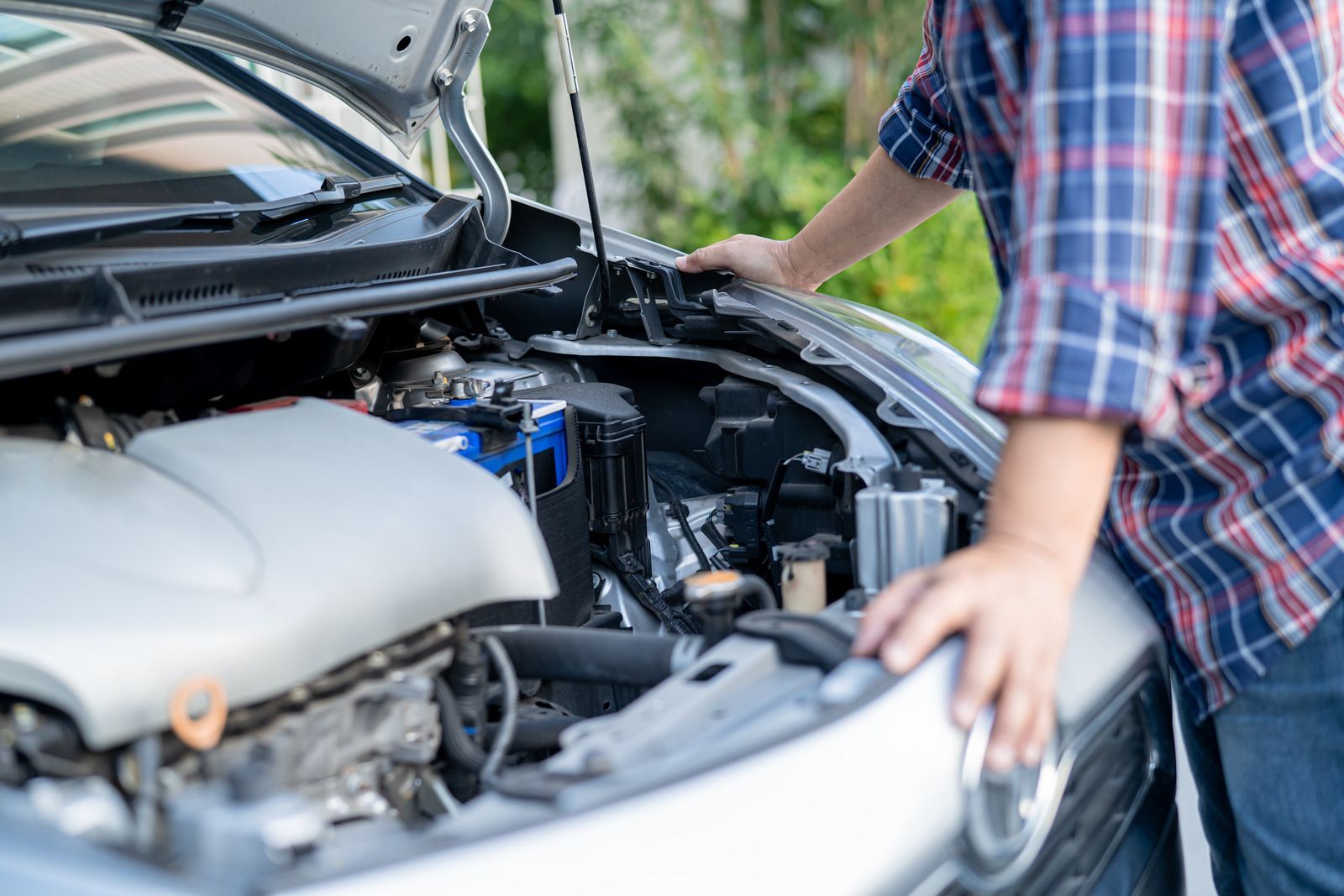
Tip: Pop the hood latch from inside the cabin once you've stopped, but leave the hood itself closed for a few minutes. This lets some heat vent out through the gap without exposing you to a rush of hot air or steam the second you lift it, and it saves you from fumbling with a scorching-hot hood release in direct sun.
Give the engine real time before doing anything else. Ten minutes isn't enough on a system that was really overheating — the coolant near the engine block can still be well above boiling even after the gauge needle has started to drop.
Why the Radiator Cap Is the One Thing Not to Touch
This is where a lot of well-meaning drivers turn a roadside inconvenience into a burn injury. The cooling system runs under pressure, and that pressure is exactly what keeps coolant from boiling at normal engine temperatures. Crack that seal while things are still hot and you're not just opening a cap — you're releasing pressurized liquid that can be well past 212 degrees, and it goes wherever the opening points, including straight up at your face and arms.
Repair shops that see these burns regularly recommend waiting somewhere in the neighborhood of forty to sixty minutes after the engine shuts off before even considering opening the system, and checking the overflow reservoir first rather than the radiator itself. The reservoir is usually a translucent plastic tank off to the side, and you can often see the coolant level through the plastic without opening anything at all.
If the reservoir looks empty or you can see an obvious leak — a wet trail under the vehicle, a cracked hose, fluid pooling near the front — that's useful information for whoever ends up looking at the car. It's not something to fix on the shoulder in ninety-eight-degree heat with the tools most people carry, which for most drivers is none at all.
Why West Texas Summers Push Engines Harder Than the Manual Accounts For
Cooling systems are engineered around an assumption: outside air that's warm, not outside air that's already pushing past a hundred degrees for weeks at a stretch. When ambient temperature climbs that high, the radiator has less of a gap to work with between the air it's pulling in and the coolant it's trying to cool down. The system that handles a ninety-degree day without complaint can start losing ground on a hundred-and-five-degree one, especially on a vehicle with an aging radiator, a slipping fan clutch, or coolant that's overdue for a flush.
Add in the kind of driving that's routine out here — long stretches of highway between San Angelo and the smaller towns around it, minimal shade, and stop-and-go through town traffic in the same afternoon a driver's also covered sixty miles of open road — and the cooling system rarely gets a real break during peak heat. A vehicle that ran fine all spring can start showing its weak points the first week temperatures hold in the triple digits.
There's also less margin for error once you are stopped. A pull-out on a rural stretch outside Christoval or Water Valley might not have another vehicle pass for several minutes, and cell coverage can thin out well before you'd expect it to. Telling someone where you are matters more out here than it does closer to town — a mile marker, a cross street, or a landmark like a specific ranch gate or water tower gives whoever's coming to help something concrete to work from.
When It's Reasonable to Keep Driving a Short Distance, and When It Isn't
If the gauge only brushed the top of normal and dropped back down once you turned off the AC and eased off the gas, driving cautiously to the next town with the heater running and an eye on the gauge is often a reasonable call. Keep speeds moderate, watch the temperature the whole way, and pull over again immediately if it starts climbing.
If the needle buried itself in the red and stayed there, if you saw real steam, or if a warning light came on and stayed on, that's a different situation. Restarting an engine that shut itself down from overheating — or one you shut off because it was clearly too hot — risks running already-damaged components. That's the point where waiting for a tow protects the engine far more than trying to nurse it another twenty miles does.
There's a middle case, too: the car seems fine sitting still, gauge normal, no visible steam, but you're honestly unsure what caused the spike in the first place. Driving off without knowing whether it was a fluke or an early warning of a bigger cooling problem is a gamble. A short tow to get it checked beats finding out the hard way, forty miles down a road with no shoulder to speak of.
Frequently Asked Questions
How long should I wait before checking my coolant after the engine overheats?
Give it at least thirty to forty-five minutes with the engine off before opening anything on the cooling system, and check the translucent overflow reservoir first rather than the radiator cap itself. If you can see the coolant level through the reservoir wall, you often don't need to open anything at all.
Is it safe to keep driving if the gauge drops back to normal after I turn off the AC?
It can be, cautiously, if the drop happens quickly and stays down with the heater running and the AC off. Keep watching the gauge continuously rather than assuming the problem solved itself, and pull over again the moment it starts climbing.
Why does my car overheat more in the summer even though nothing else has changed?
Cooling systems have less of a temperature gap to work with when the outside air is already extremely hot, so a radiator, fan clutch, or coolant mix that was borderline in spring can fall behind once temperatures hold in the triple digits for days at a stretch.
What if there's no shoulder to pull onto where I break down?
Keep the heater running and creep at a safe, steady speed toward the nearest exit, wide spot, or side road rather than stopping in a traffic lane. A moving vehicle that's slowly cooling is safer than a stopped one blocking part of the road.
Should I add water to the radiator if I'm out of coolant on the road?
Only after the system has fully cooled for at least thirty to forty-five minutes, and only in small amounts if you have water on hand and no coolant available. It's a stopgap to get you moving again, not a fix, and the cooling system still needs to be properly checked and refilled with coolant afterward.
Can I cause more damage by shutting the engine off while it's overheating?
No — running an overheating engine longer is what causes the real damage. Shutting it off and letting it cool protects the head gasket, cylinder head, and other components far more than continuing to idle or drive on a system that's already too hot.
Small Precautions Now Prevent Costly Engine Damage
A rising temperature gauge on a hundred degree day is not background noise. It is a genuine warning before something under the hood breaks. The habits that protect an engine stay simple: cut the AC the moment the needle moves, find a shoulder instead of the first gap in the fence line, and leave the radiator cap alone no matter how tempting it is to check yourself. Those few minutes often separate a delayed afternoon from lasting engine damage.
Out here in San Angelo, TX where the next town can be a drive away, patience matters more. Nobody wants to sit on a hot shoulder waiting, but a warped cylinder head does not care how inconvenient the timing was. Eddy's Towing
has spent 10
years getting overheated engines off San Angelo shoulders before small problems turn into damage. The drivers who come through a summer overheat with nothing worse than a delayed afternoon are the ones who stopped early.