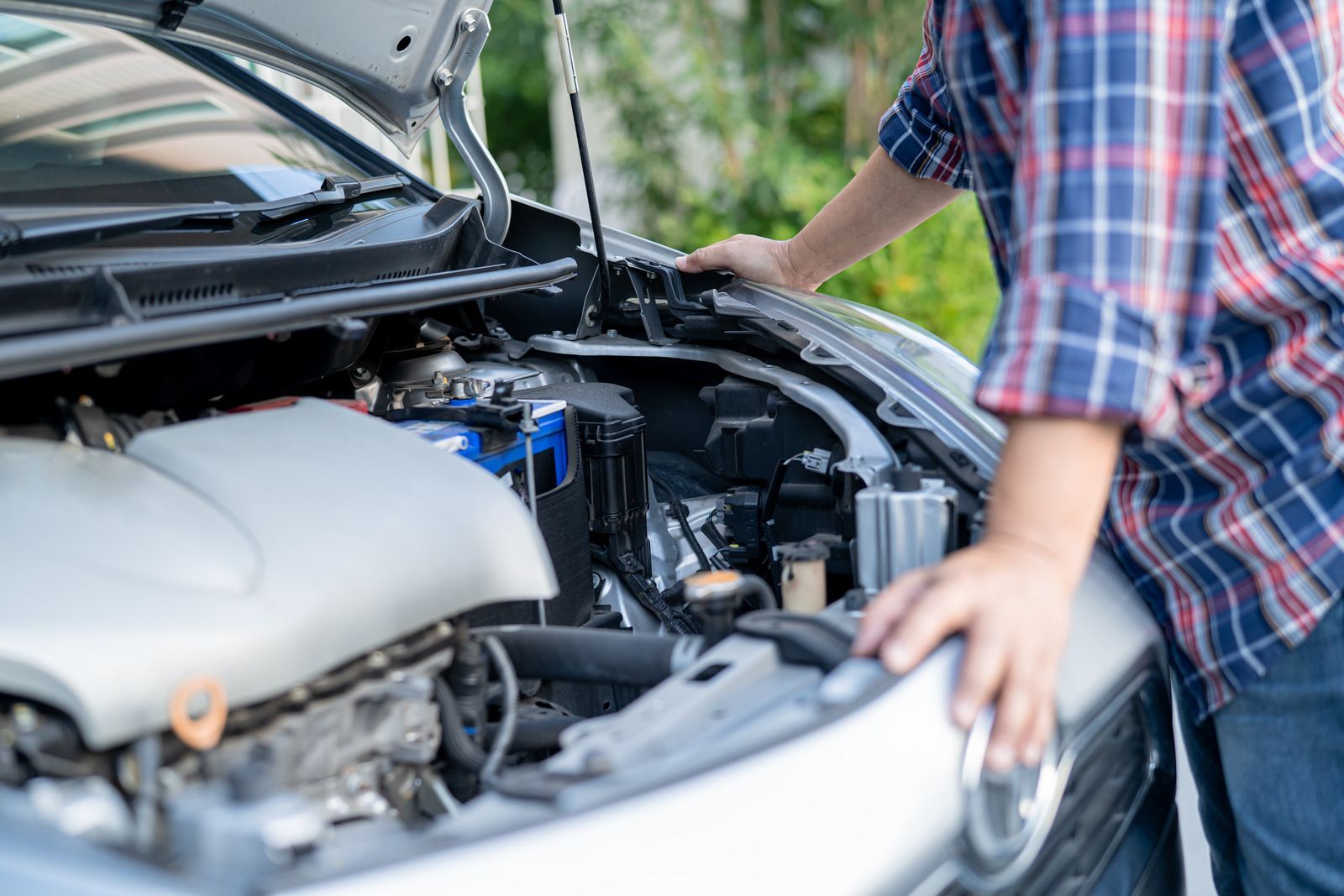
Stranded Somewhere With No Cell Signal Out in the Country? How to Stay Safe
August 25, 2026
Quick Answer: If your car breaks down where there is no cell signal, stay calm and stay with the vehicle. It is easier for anyone searching to find a car than a person on foot. Step outside to a clear view of the sky to check for an emergency satellite connection, try sending a text instead of a call since texts often go through on a weaker signal than calls, and use hazard lights, triangles, or a raised hood to make the car visible. Ration water, stay out of direct sun, and only walk for help if you have a clear, close destination, daylight, and know exactly where you are headed.
The bars on your phone drop to nothing about the same time the engine does. You are somewhere between towns, the road stretching flat and empty in both directions, and the last house you passed was fifteen minutes back. No signal means no easy call for help, and that changes the plan. Out here, in the Concho Valley and the stretches around it, long gaps between towers are just part of the territory. Knowing what to do before you need it makes the difference between a stressful hour and a genuinely dangerous one.
Why the Signal Disappears Out Here
Cell coverage depends on towers, and towers cost money to build in places with few customers. Between San Angelo and the smaller communities around it, ranchland and open range stretch for miles with nothing to interrupt the view but fence line and mesquite. Carriers space towers along the routes people drive most, which leaves gaps on the county roads, the ranch cutoffs, and even some highway stretches where the terrain dips or a rise blocks the line of sight to the nearest tower. A signal that shows full bars in town can vanish completely ten minutes down the road, and it can come and go depending on which direction your phone is facing or whether you are parked in a low spot.
This is not a flaw in your phone. It is simply how rural coverage works, and it is worth knowing before you are relying on it in an emergency.
Try These Before You Assume You Are Cut Off
A dropped signal is not always a dead end. A few things are worth trying before you settle in to wait.
Step Outside And Look For Open Sky
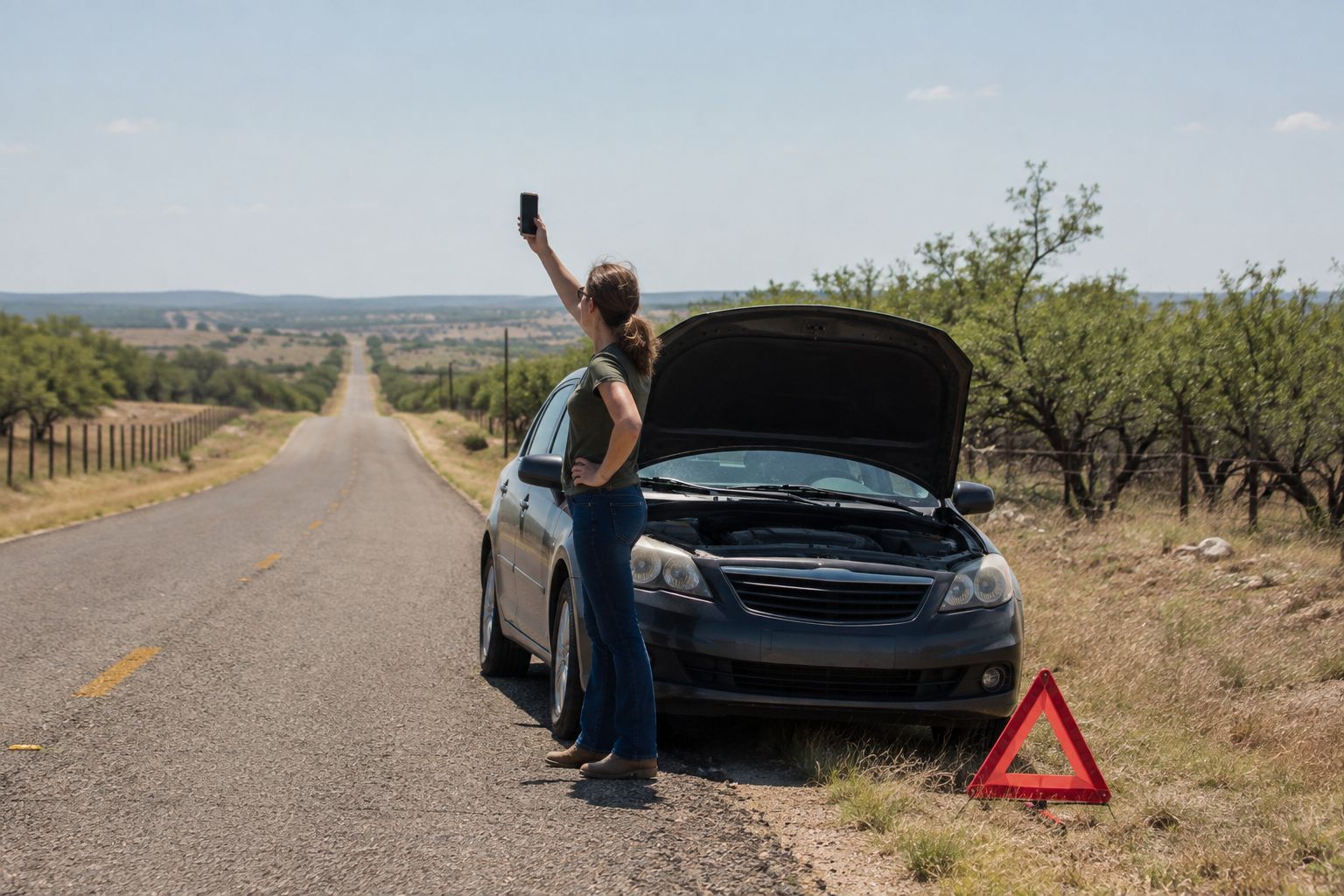
Newer phones, including recent iPhone models, can connect to an emergency satellite network when there is no cell or WiFi coverage available. To use it, you generally need to be outdoors with a clear view of the sky and the horizon, away from trees or canyon walls, and the phone will walk you through pointing toward the strongest connection. It is not instant, and it is meant for genuine emergencies, but it exists for exactly this kind of situation.
Send A Text Before You Give Up On A Call
A text message needs far less signal strength to get through than a voice call does. If a call will not connect, try texting a family member, a friend, or 911 with your situation and your best guess at your location. Many areas support text-to-911 even where a voice call fails.
Check Your Vehicle's Own System
Some newer vehicles include a built-in emergency calling system that connects through its own cellular hardware, separate from your phone. If your car has one, the button is usually on the rearview mirror or overhead console, and it is worth a try even if your phone shows nothing.
Move To Higher Ground If It Is Safe And Close
Sometimes a rise a short walk away, still within sight of the car, is enough to pick up a weak signal that the low spot in the road is blocking. Do not wander far. Stay where you can still see your vehicle and get back to it quickly.
The Vehicle Is Your Safest Bet
Staying With The Car Beats Going For Help On Foot
A car is far easier to spot from the road or from the air than a person walking across open country, and it gives you shade, shelter, and a fixed point that anyone looking for you can search around. Once someone knows roughly where you were headed, whether that's a family member you told, a route you follow regularly, or a location a text managed to send before it dropped, your vehicle becomes the anchor point for anyone coming to check on you.
Leaving Only Makes Sense With Real Conditions In Your Favor
If you decide to walk, you need daylight remaining, a specific and close destination you can see or are confident about, favorable weather, and enough water to make the trip. Leave a note on the dashboard with the time you left, your direction of travel, and where you are headed. Without all of those pieces lined up, staying put and waiting is almost always the safer choice, even when the waiting feels unbearable.
Someone Needs To Know Your Route
Before you ever hit a stretch with weak coverage, tell someone your route and rough timing. A missed check-in is what starts a search. If your last message before the signal dropped said which highway you were on and your direction of travel, that alone can narrow a search area from hundreds of square miles down to a manageable stretch of road.
Manage the Wait: Heat, Visibility, and Water
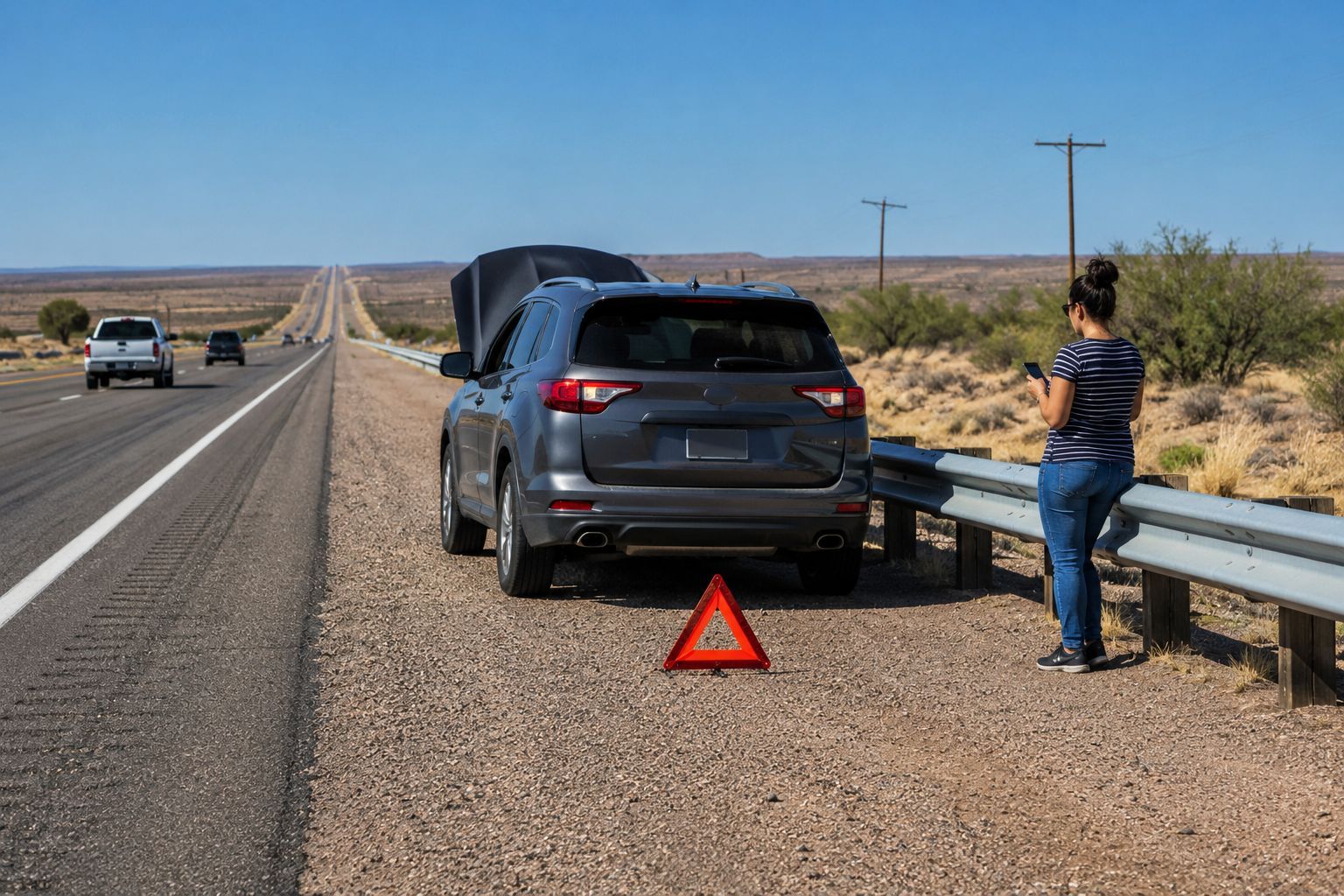
Make the car visible from a distance. Hazard lights, a raised hood, and reflective triangles or flares set out behind the vehicle all signal to any passing driver that you need help, not that you are simply pulled over. At night, the interior dome light adds a little extra visibility. None of this depends on cell signal at all, and it is often what actually gets a passerby to stop and offer help or call it in once they reach coverage themselves.
TIP: Before your signal drops on a long drive, send a quick text noting the highway, your direction of travel, and your rough location. If service comes back only in short flickers, that message is far more likely to get through than a phone call, and it gives whoever receives it a real starting point if you go quiet after that.
Waiting itself becomes the harder part once the sun climbs. A car with the engine off loses air conditioning fast, and heat exhaustion symptoms including heavy sweating, dizziness, nausea, and a fast, weak pulse can build within an hour in a hot cabin. Ration whatever water you have rather than draining it in the first thirty minutes, sip steadily instead of gulping, and get into shade if you leave the car, whether that is a stand of mesquite, an overpass, or the shadow the vehicle itself casts. Older passengers, kids, and pets feel the heat fastest, so keep a close eye on anyone traveling with you.
WARNING: Never attempt a repair while any part of you or the car is in a live traffic lane, and do not raise the hood and start poking around a hot engine. Radiators and hoses hold scalding pressure, and removing a radiator cap on a hot engine can cause serious burns. If the car is leaking fluid, showing smoke, or sitting anywhere close to traffic, leave it for a professional and stay clear.
Ration light and battery use. Your phone is your best tool for catching a satellite signal or a returning bar of coverage, so avoid draining the battery on anything that is not trying to reach help. Turn down screen brightness, close apps running in the background, and switch to a low-power mode if your phone has one. A dead phone cannot send anything, no matter how strong the signal gets later.
What Not to Do When You Are Off the Grid
Do Not Walk Without A Clear Plan
Setting off in a direction because it feels like doing something is how people end up genuinely lost in open country. Every step away from the car should have a destination and a reason behind it.
Do Not Accept A Ride From Someone You Do Not Know
Wait for it if you can, but if a stranger stops and offers a ride rather than a call for help, it is reasonable to decline and ask them to send help back once they reach coverage instead.
Do Not Skip Telling Someone Your Plans Before You Leave
The single biggest factor in how fast help finds you is whether anyone knows roughly where to start looking. A five-second text before you lose signal is worth more than almost anything else on this list.
Do Not Assume No Bars Means No Help Is Coming
Weak signal areas are still monitored, and passing drivers, ranch traffic, or a passerby with a different carrier may have coverage where you do not. Staying visible matters just as much as trying to call out.
Frequently Asked Questions
What should I do first if my phone shows no signal after a breakdown?
Stay with the vehicle and check for an emergency satellite connection if your phone supports it, which usually means stepping outside to a clear view of the sky. While you check, put on your hazard lights and set out any reflective triangles or flares you carry so you are visible in the meantime.
Will a text go through if a call will not connect?
Often, yes. A text message needs a much weaker signal to get through than a voice call, so it is worth trying to text a family member, friend, or 911 with your situation and location even after a call has failed. Many areas also support text-to-911 directly.
Is it ever safe to leave the car and walk for help?
Only when you have daylight remaining, a specific and close destination, favorable weather, and enough water for the walk. Leave a note with your departure time and direction before you go. If any of those conditions are missing, staying with the vehicle is the safer choice.
How do I make my car visible to passing drivers with no signal to call anyone?
Turn on your hazard lights immediately, raise the hood, and set out reflective triangles or flares behind the vehicle if you carry them. At night, the interior dome light adds visibility. These signals work whether or not your phone has any coverage at all.
How much water do I really need if I am stuck for a while?
More than you would guess, especially in summer heat. Heat exhaustion can develop within an hour in a hot, unventilated car, so ration what you have, sip steadily rather than all at once, and get into shade whenever possible while you wait.
Does my car's own emergency system work even if my phone has no bars?
It can. Some vehicles include a built-in emergency calling feature that connects through separate hardware from your phone, which means it may work in spots where your personal carrier has no coverage. Check your owner's manual or the button near the rearview mirror if your vehicle has this feature.
Staying Calm Is the Real Survival Skill
Breaking down with no signal feels isolating, but the situation is far more manageable than it seems in the moment. Staying with your vehicle, checking for a satellite connection, sending a text instead of forcing a call, and making your car visible all work together to shorten the wait. None of these steps require perfect conditions, just a clear head and a willingness to try the tools already available. The goal is never to disappear into the landscape but to stay exactly where help can find you.
For 10
years, Eddy's Towing
has watched these rural stretches around San Angelo, TX teach the same lesson again and again: patience and visibility beat panic every time. Drivers who ration water, seek shade, and resist the urge to wander tend to come through these situations just fine. A dead zone on the map is not the same as being forgotten. With the right approach, even the quietest stretch of road eventually leads someone back to you.