Car Died on the Side of the Highway? What to Do While You Wait
July 20, 2026
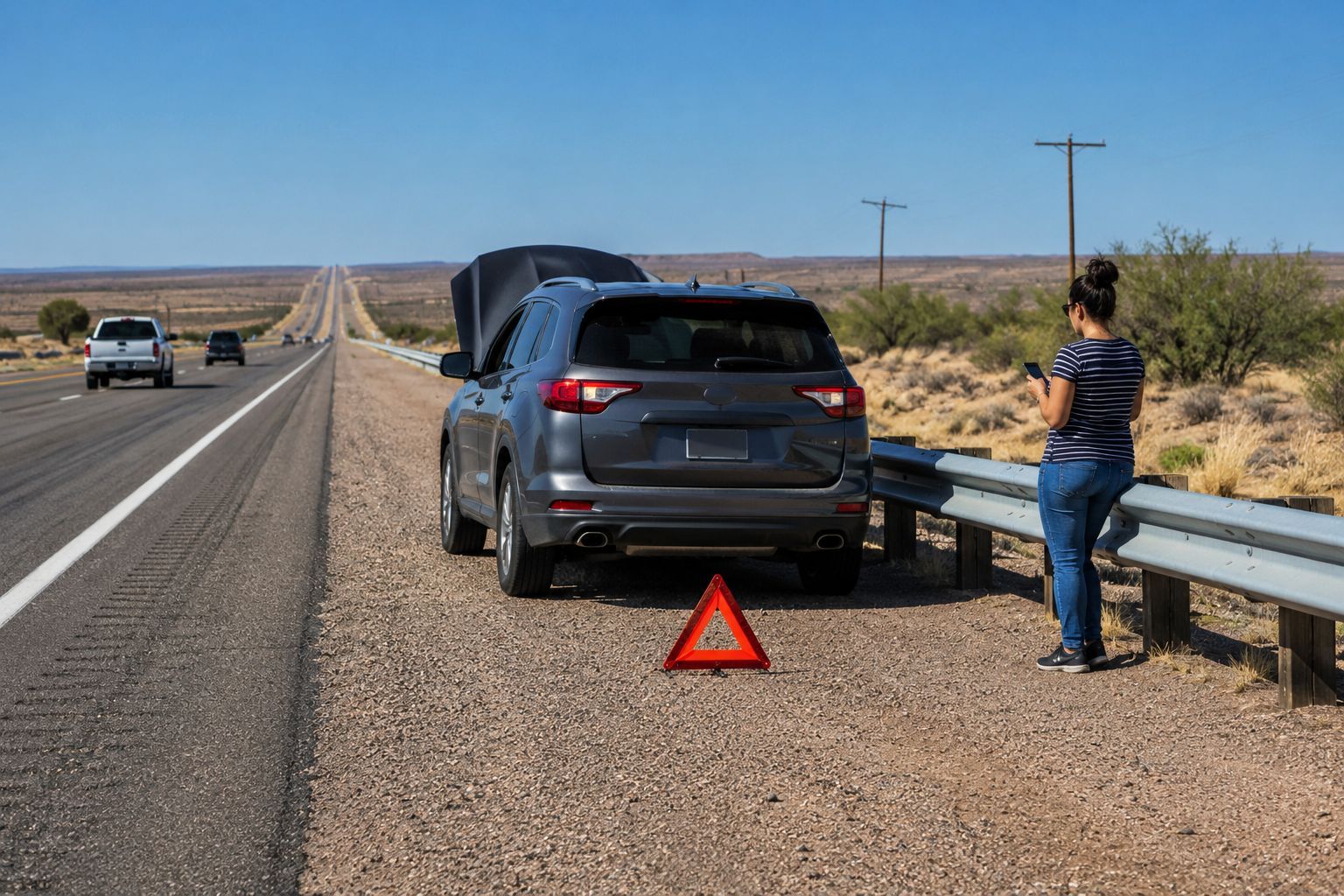
Quick Answer: If your car dies on the highway, get it as far off the travel lanes as its momentum will carry you, turn on your hazard lights, and stay buckled inside if traffic is heavy. Once you are safely clear, call for a tow and give your exact location or the nearest mile marker. Then wait well away from passing traffic. On long, remote stretches in the heat, keep water within reach, leave the engine off, and do not try to make repairs while you are anywhere near the traffic lane.
The engine sputters, the dash lights flicker, and the wheel suddenly gets heavy in your hands. You are rolling down a long stretch of highway with towns thirty or forty miles apart, and the car has quit on you. There is no shoulder in sight, or maybe there is one but it is narrow and the traffic is moving fast. Your first instinct is to figure out what went wrong. Set that aside for a minute. The first job is getting you and your car out of harm's way, and everything else comes after that.
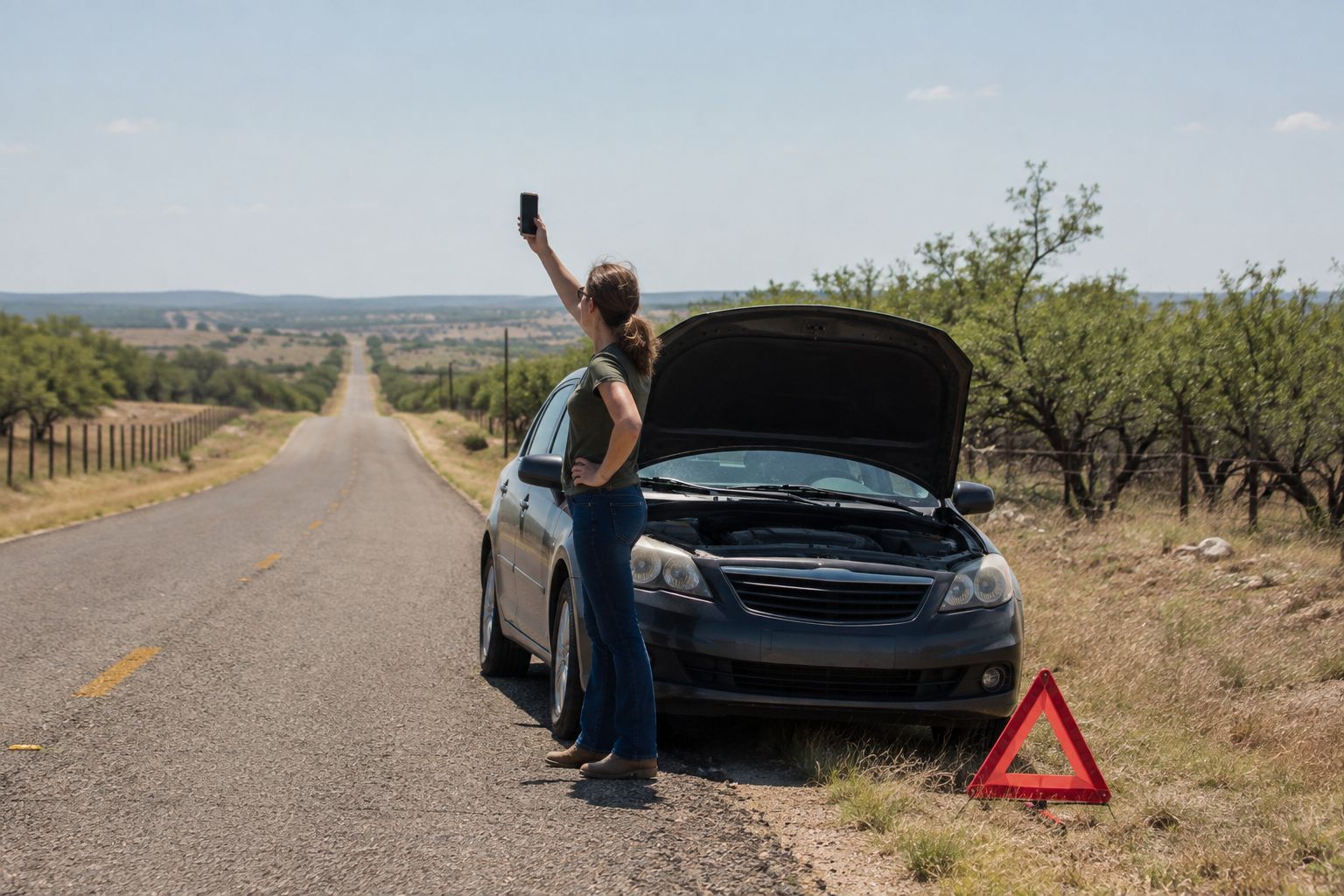
A dead car on a West Texas highway is a different situation than a breakdown in town. Distances are long, cell coverage comes and goes, and the heat can climb into the triple digits before noon. The steps below are the same ones a tow operator would want you to take, in the order that keeps you safest while you wait for help to reach you.
First Job: Get the Car Off the Road While It Still Rolls
The moment you feel the car dying, you usually still have a few seconds of momentum and steering left. Use them.
Coast, do not stomp
Resist the urge to slam on the brakes. Let the car's momentum carry you toward the right shoulder or, better yet, an exit ramp, a wide gravel pull-off, or a parking lot. Even if you have to roll on a flat tire and ruin a rim, getting off the travel portion of the road is worth it. The farther you are from moving traffic, the safer you will be.
Steer for the widest, straightest spot
Aim for a stretch of shoulder that is wide and away from any curve in the road. Drivers coming up behind you have less time to react around a bend, so a straightaway gives everyone more room. Once you stop, put the transmission in park, set the parking brake, and leave the wheels pointed straight ahead.
Turn on your hazard lights right away
Flip them on the instant you know something is wrong, before you even finish coasting to a stop. On a fast rural highway, those flashers are the first thing that tells an approaching driver you are stopped and not moving with traffic.
If the car quits in a spot where you cannot reach a shoulder at all, do not try to push it or dash across lanes. Leave the hazards on, stay buckled, and call for help while you assess what is happening around you.
Once You Have Stopped: Make Yourself Impossible to Miss
Getting stopped is only half of it. Now you want every driver coming toward you to see you from as far off as possible.
Add signals behind the car
If you carry reflective triangles, flares, or cones, set them out on the shoulder behind your vehicle so traffic gets warning well before it reaches you. Popping the hood is another recognized sign that a car is disabled rather than just parked. If you have none of those, turning on the interior dome light after dark helps too.
Understand the move-over rule working in your favor
In Texas, as in most states, drivers are required to move over a lane or slow down when they pass a stopped vehicle showing warning signals. Your hazard lights and any triangles or flares are what trigger that protection, which is one more reason to get them going immediately.
Know about the pull toward your lights
There is a well-documented hazard called the moth effect, where tired or distracted drivers unconsciously drift toward the very lights they are looking at, even lights parked safely on the shoulder. That is exactly why you want distance between yourself and the pavement, not just a flashing car. Being visible and being close to traffic are two different things.
TIP: When you call for a tow, give your direction of travel along with the highway number and the last mile marker, exit, or crossroad you passed. On a long rural highway, "westbound on the highway near mile marker 388" gets a truck to you far faster than a dropped pin that never fully loads on a weak signal.
Stay Inside or Get Out? How to Read It
This is the question people get wrong most often, and the honest answer is that it depends on where you stopped.
When staying put is safer. If you are in heavy or fast traffic, on a narrow shoulder, or up on a bridge or overpass, you are usually better off inside the car with your seatbelt on, facing forward, and the doors locked. A modern vehicle is built to protect you in a collision, and staying belted in the normal seated position gives you the best odds if another vehicle drifts into yours. Getting out and standing beside the car on a tight shoulder puts you in the most dangerous place there is.
When getting out makes sense. If you have reached a wide, clear spot well away from the lanes, it can be safer to exit, especially if you smell smoke or see any sign of fire. When you do get out, leave through the door away from traffic, usually the passenger side, and move well beyond the guardrail or up an embankment to higher ground. Face the oncoming traffic so you can see a problem coming and step clear. Do not stand right next to the car or in front of or behind it.
Whichever you choose, keep your phone in hand and the ringer up so you can hear the tow operator call back with an update on the arrival time.
What to Keep in the Car Before You Ever Need It
The best time to prepare for a breakdown is on a normal day, not on the shoulder. Surveys have found that more than forty percent of drivers carry no emergency kit at all, which is a rough bet on these long, empty highways.
Pack the basics that matter most
A workable kit holds drinking water, a phone charger or power bank, a flashlight with spare batteries, a first-aid kit, some non-perishable snacks, jumper cables or a portable jump pack, and reflective triangles or flares. Toss in a hat and a small towel for the sun. None of it takes much space, and any one item can make a bad afternoon much easier.
Give your battery and tires a look before long drives
Summer heat is hard on batteries, and most only last three to five years before they start letting you down. Underinflated tires build up heat as they roll, which is a common cause of a highway blowout. A quick battery test and a tire pressure check before a long haul head off a lot of roadside calls.
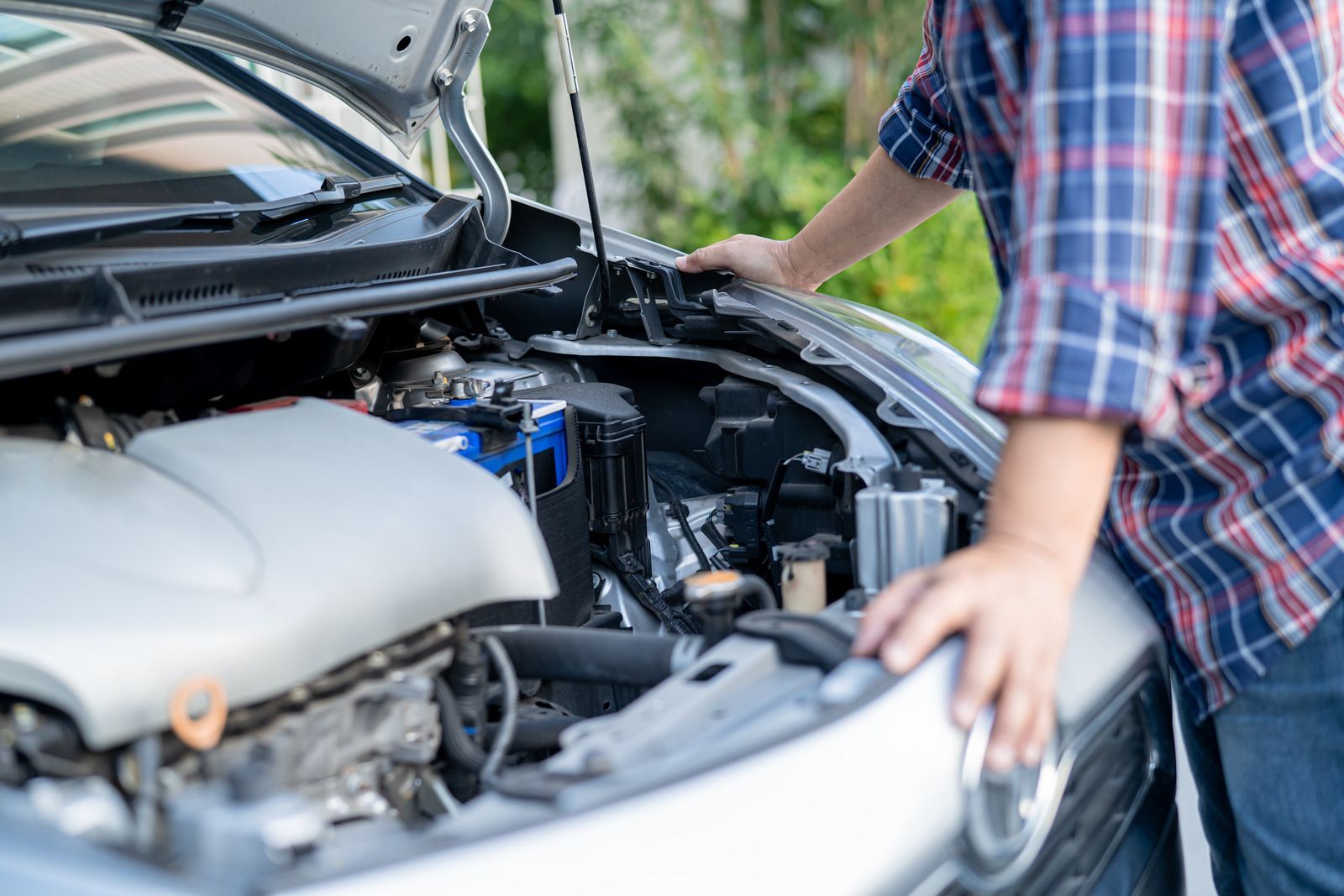
WARNING: Never attempt a repair while any part of you or the car is in a live traffic lane, and do not raise the hood and start poking around a hot engine. Radiators and hoses hold scalding pressure, and removing a radiator cap on a hot engine can cause serious burns. If the car is leaking fluid, showing smoke, or sitting anywhere close to traffic, leave it for a professional and stay clear.
When to Stop Troubleshooting and Just Call
There is a point where the smart move is to quit diagnosing and get a tow rolling your way. If the car will not restart after a couple of tries, if it died from overheating, if you see smoke or leaking fluid, or if you are stopped somewhere exposed, you have reached it. A tow gets both you and the vehicle off a dangerous highway and to a place where the actual problem can be sorted out without traffic flying past your shoulder.
The same is true when the light starts to fade or the heat is climbing. Waiting an hour for a friend who might be able to look at it is rarely worth an hour of sitting beside a live highway. Getting hooked and hauled to safety is the faster path back to normal.
Frequently Asked Questions
Is it safer to stay in the car or get out while I wait?
It depends where you stopped. In heavy traffic, on a narrow shoulder, or a bridge, stay inside belted with doors locked. Well off the road, exit away from traffic and move behind a guardrail.
What should I do first the moment my car dies on the highway?
Turn on your hazard lights immediately and use the car's momentum to steer onto the shoulder or an off-ramp, away from any curve. Do not slam the brakes. Getting out of the travel lanes matters most.
How do I tell a tow where I am on a remote highway with a weak signal?
Give your direction of travel, the highway number, and the last mile marker or exit you passed. Text can go through where a call cannot, and a mile marker beats a map pin that will not load.
My car overheated and died. Can I just let it cool and drive on?
Do not count on it. Restarting after an overheat can cause major damage, and opening a hot radiator can badly burn you. Let it sit, stay clear of the hood, and have it towed for inspection.
What should I always keep in the car out here?
Drinking water, a phone charger or power bank, a flashlight, a first-aid kit, snacks, jumper cables or a jump pack, and reflective triangles. In summer, extra water and sun protection matter most once the air conditioning quits.
Should I try to fix the car myself while I wait?
Only the most basic checks, and only if you are well off the road. Do not work in a traffic lane or open a hot engine. If it is leaking, smoking, or near traffic, leave it alone.
Getting Back on the Road Safely
Call for a tow and get clear of the highway — When your car dies on a long, hot stretch of highway, you need someone who knows these roads and can reach you fast. Serving San Angelo, Texas, Eddy's Towing
has three generations of
towing and recovery
experience and 10
years behind every call, gets a truck rolling to your exact location, and safely loads and hauls a dead or overheated vehicle so you are not left waiting beside traffic. Military and first-responder discounts are always available. Reach out the moment you are safely stopped, and let an experienced operator handle the recovery while you focus on staying out of harm's way.